Cart
0
Last Updated: November 4, 2026
Quick Summary
The best natural alternatives to medicated dandruff shampoo are diluted tea tree oil, apple cider vinegar rinses, aloe vera, coconut oil, baking soda, aspirin with salicylic acid, and dietary omega-3 and zinc. Match the remedy to your flake type, dilute correctly, and test one at a time for four weeks before judging results.
- Dilute tea tree oil to roughly 5% and use it two to three times weekly.
- Mix one part apple cider vinegar with two parts water and start once weekly.
- Limit baking soda to once weekly at most, since repeated use dries hair and scalp.
- Track itch, flake frequency, and redness weekly on a 1-to-5 scale for four weeks.
- See a clinician if redness spreads, sores appear, or flakes do not improve after four weeks.
Table of Contents
- Quick Comparison: Natural Dandruff Remedies at a Glance
- Natural Remedies for Dandruff and Itchy Scalp: What Works and What Doesn't
- Tea Tree Oil for Dandruff: Dilution, Evidence, and Irritation Risk
- How to Get Rid of Dandruff With Normal Shampoo
- Natural Alternatives to Medicated Dandruff Shampoo for Hair Loss Concerns
- Matching the Remedy to the Cause of Your Flaking
- A 4-Week Trial Plan and When Natural Remedies Are Not Enough
- Building Your Derma Salt Scalp Routine
- Frequently Asked Questions
Quick Comparison: Natural Dandruff Remedies at a Glance
The best natural alternatives to medicated dandruff shampoo are not the strongest-smelling oils or the harshest rinses.
Here is the short version before the detail. Each remedy below targets a different cause of flaking, so the "best" one depends on whether your scalp is oily and yeasty or dry and irritated.
| Remedy | Best For | Evidence Level | Main Risk | How Often |
|---|---|---|---|---|
| Tea tree oil | Mild flaking, itch | Moderate | Irritation if undiluted | 2-3x weekly |
| Apple cider vinegar rinse | Buildup, dull hair | Low to moderate | Stings broken skin | 1-2x weekly |
| Aloe vera | Dry, inflamed scalp | Low | Rare allergy | Daily |
| Coconut oil | Dry scalp flakes | Low | Feeds yeast for some | 1-2x weekly |
| Baking soda | Oily scalp | Low | Dries out hair | 1x weekly max |
| Aspirin and salicylic acid | Thick, adherent flakes | Moderate | Over-drying | 1-2x weekly |
| Dietary omega-3 and zinc | Flakes tied to diet | Moderate | Excess zinc | Daily intake |
Below, we break down what actually works, what to skip, and how to test any remedy without wrecking your scalp.
Natural Remedies for Dandruff and Itchy Scalp: What Works and What Doesn't
Most natural remedies for dandruff and itchy scalp work by reducing yeast, calming inflammation, or loosening dead skin. None of them cure seborrheic dermatitis, the inflammatory condition behind most stubborn dandruff.
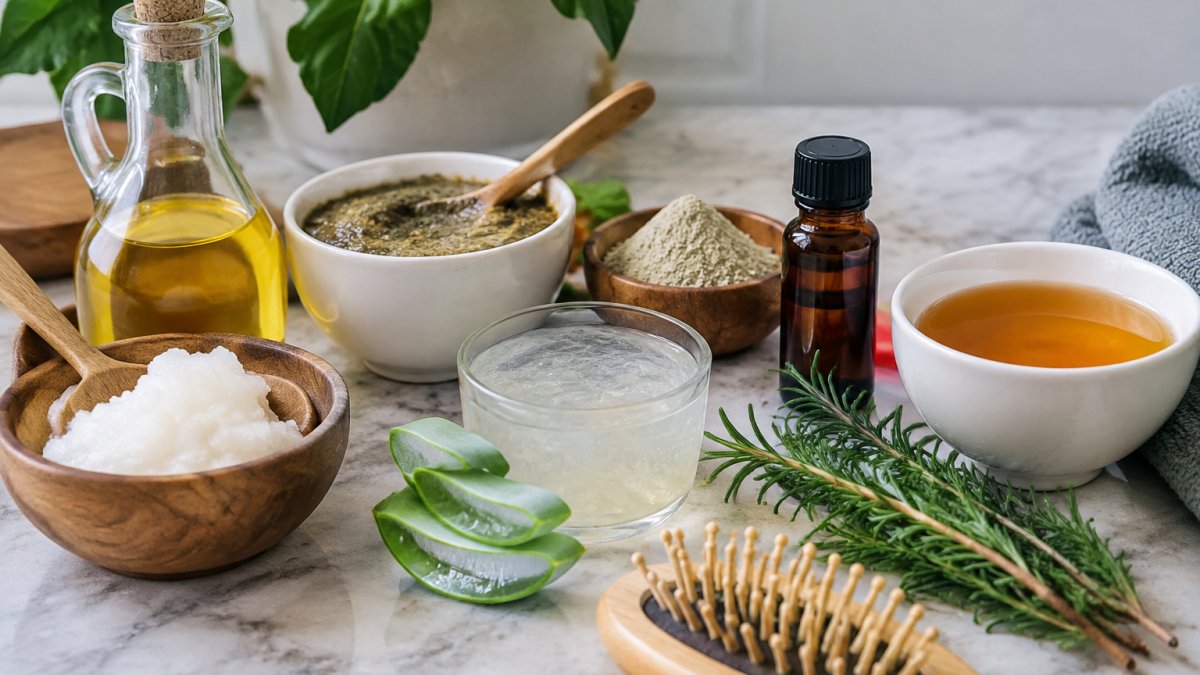
The remedies below are grouped by how much support they have, not by how popular they are. For quick, practical techniques to calm an itchy scalp, see how to stop skin itching fast.
Apple Cider Vinegar Rinses
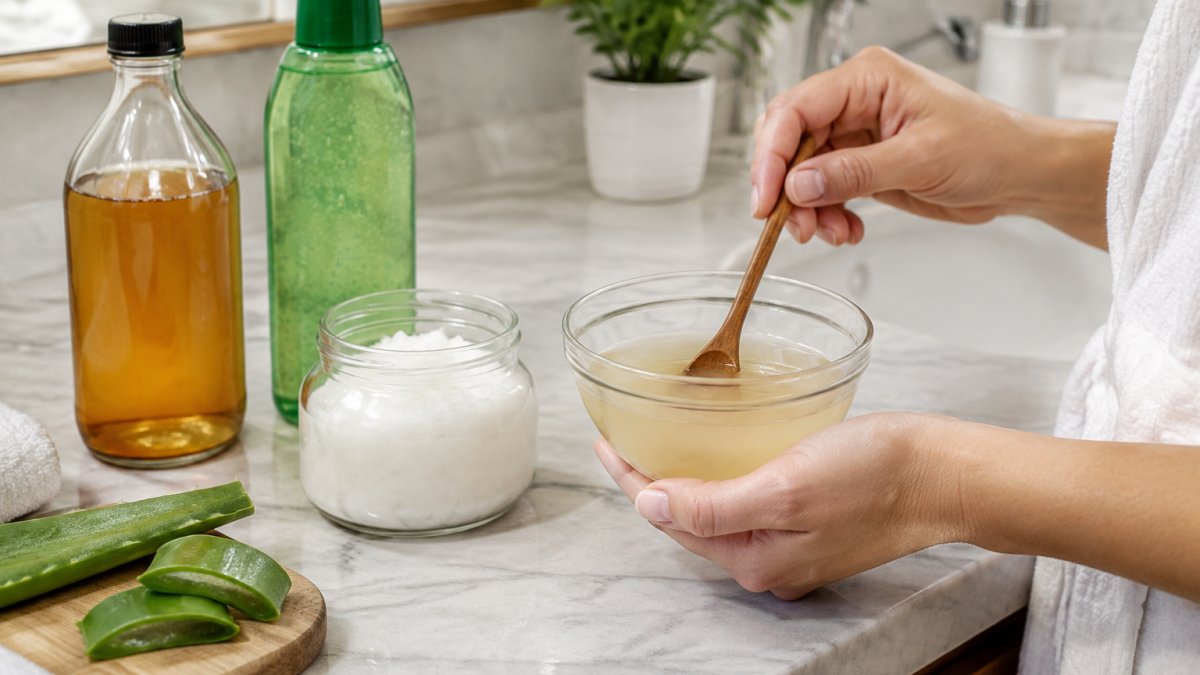
Apple cider vinegar is acidic, and some people use it in rinses for dandruff, though the evidence is mostly anecdotal rather than from controlled trials. Mix one part apple cider vinegar with two parts water, apply after shampooing, leave on for two to three minutes, then rinse. Start once weekly and build to twice weekly only if your scalp tolerates it. Watch out: undiluted vinegar on broken or scratched skin burns, and repeated acidic rinses can strip color-treated hair and leave it rough.
Aloe Vera
Aloe vera is a common choice for people who want a lightweight option without fragrance or essential oils. Apply a thin layer of pure aloe gel to a clean scalp daily or every other day and leave it on; there is no need to rinse unless the residue bothers you. Evidence for aloe specifically against dandruff is limited, so judge it on itch and redness rather than flake disappearance. Watch out: a small number of people are allergic to aloe latex; patch-test on the inner forearm for 24 hours first.
Coconut Oil
Some people apply coconut oil to the scalp before washing to soften flakes. It is also the remedy most likely to backfire on oily dandruff, because the fatty acids can feed the yeast that drives seborrheic dermatitis. Use it as a pre-wash treatment once or twice weekly: massage a small amount into the scalp, leave for 20 to 30 minutes, then shampoo out thoroughly. Watch out: leaving coconut oil on overnight or using it daily can worsen flaking and leave hair limp, especially on fine hair.
Baking Soda
Baking soda is used in some no-poo routines, though it is alkaline and can be drying. It is alkaline, however, and repeated use dries out both hair and scalp, which can trigger more flaking over time. Limit it to once weekly at most: make a paste with water, massage gently into the scalp, leave for a few minutes, and rinse thoroughly. Watch out: baking soda is abrasive; do not scrub with it on inflamed or broken skin, and do not combine it with vinegar in the same session, since the two neutralize each other.
Aspirin and Salicylic Acid
Crushed aspirin contains salicylic acid, an ingredient found in some medicated dandruff shampoos. Dissolve one or two uncoated tablets in a small amount of shampoo, apply to the scalp, leave for two to three minutes, and rinse. Use one to two times weekly. Watch out: aspirin is not appropriate for anyone with a salicylate allergy, and overuse dries the scalp; do not combine it with another salicylic acid product in the same wash.
Tea Tree Oil
Tea tree oil is the best-studied essential oil for dandruff, with antifungal and anti-inflammatory properties and small studies suggesting it reduces flake severity with regular use. Dilute to roughly 5% in a carrier oil or unscented shampoo, never apply it neat, and patch-test on the inner forearm for 24 hours first. Use two to three times weekly. Watch out: tea tree oil is the remedy most likely to cause contact irritation when misused, and it should not be used on broken skin.
Dietary Omega-3 and Zinc
Flakes tied to diet are uncommon, but omega-3 fatty acids and zinc support skin barrier function and are reasonable to address if your intake is low. Food sources are generally the more conservative route for dietary intake. Watch out: zinc supplements can cause nausea and interfere with copper absorption at high doses, so do not exceed the labeled daily value without a clinician's guidance.
Tea Tree Oil for Dandruff: Dilution, Evidence, and Irritation Risk
Tea tree oil is the best-studied essential oil for dandruff. It has antifungal and anti-inflammatory properties, and small studies suggest it reduces flake severity with regular use.
Dilute tea tree oil to roughly 5% in a carrier oil or unscented shampoo. If you already react to essential oils, our guide to soothing sensitive skin naturally walks through gentler calming steps before you try anything stronger.
How to Get Rid of Dandruff With Normal Shampoo
Changing how you wash, not just what you wash with, may help with mild flaking.
Try this routine:
- Shampoo every other day rather than daily to protect the scalp barrier
- Massage the scalp for 60 seconds instead of scrubbing with nails
- Rinse thoroughly, since leftover product feeds flakes
If flakes persist after three weeks of better washing, the cause is likely yeast or inflammation rather than hygiene, and a targeted remedy is the next step.
Natural Alternatives to Medicated Dandruff Shampoo for Hair Loss Concerns
Some popular remedies, including harsh vinegar rinses and undiluted essential oils, can irritate the scalp.
The safer path is to calm the scalp first. Look for options that reduce irritation without stripping oils, and avoid anything that stings on application. Persistent flaking with thinning hair deserves a dermatologist's look.
Matching the Remedy to the Cause of Your Flaking
The remedy should follow the cause, and the cause is not always yeast. Dandruff-like flakes can come from seborrheic dermatitis, a dry scalp, contact dermatitis from a product, or another skin condition such as psoriasis, and the best approach differs for each. Before you buy anything, spend a week observing your scalp rather than treating it.
Step 1: Identify Your Flake Pattern
Oily, yellowish flakes that cling to the scalp and hairline, often with redness and itching, usually point to yeast overgrowth and seborrheic dermatitis. Dry, white flakes that fall easily onto shoulders, with a tight or itchy scalp and no redness, suggest a dry scalp. Flakes that appear only after a new product, with stinging or burning, suggest contact irritation.
Step 2: Match the Remedy to the Pattern
For oily, yeasty flaking, antifungal options fit best: diluted tea tree oil two to three times weekly, or a salicylic acid wash once or twice weekly to loosen scales. For dry, tight scalps, aloe vera and a pre-wash coconut oil treatment help more than antifungal agents, and harsh rinses should be avoided. For contact irritation, stop the suspected product first and use aloe or a plain, fragrance-free wash until the scalp calms. If your flaking comes with redness and itching along the hairline, pH balance is often part of the picture; our guide to restoring skin pH balance naturally explains which habits support it.
Step 3: Test One Remedy at a Time
Change one thing at a time and give it four weeks before judging it. Keep the rest of your routine constant, and track three observable measures each week on a simple 1-to-5 scale: itch intensity, flake frequency, and scalp redness. A remedy that lowers itch but not flakes, or vice versa, is still telling you something. Watch out: stacking several remedies at once makes it impossible to know which one helped and which one caused the irritation.
Step 4: Know When to Stop
Stop a remedy and see a clinician if you notice spreading redness, open sores, swelling, or flakes that do not improve at all after four weeks, or if itching disrupts sleep. Persistent, severe, painful, or spreading symptoms are beyond what natural alternatives can reasonably manage, and prescription treatment is the right call there. If you have questions about the routine in this guide, the Derma Salt FAQ covers the common ones.
A 4-Week Trial Plan and When Natural Remedies Are Not Enough
Test one remedy at a time for four weeks before judging it. Change nothing else in your routine during that window, and track flake volume and itch on a simple 1-to-5 scale each week.
Stop and see a dermatologist if you notice spreading redness, open sores, flakes that do not improve at all after four weeks, or itching that disrupts sleep. Natural remedies are not enough for moderate to severe seborrheic dermatitis, and prescription treatment is the right call there. If you have questions about the routine in this guide, the Derma Salt FAQ covers the common ones.
Building Your Derma Salt Scalp Routine
A natural routine works best when it is simple enough to repeat. Ours is built around one principle: calm the scalp, then let it rebalance.
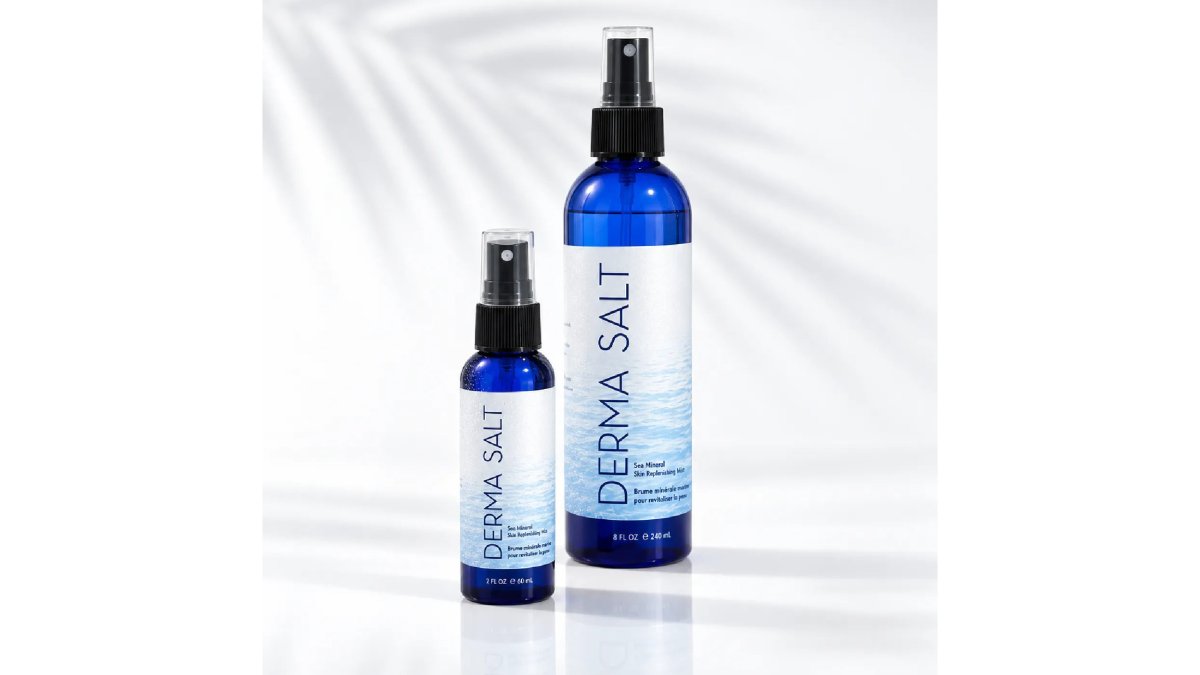
Spray Derma Salt onto a clean scalp and massage gently. Its blend of mineral-rich salts and Kentucky limestone spring water is free of alcohol, fragrance, and synthetic chemicals.
The single pack is the easiest way to start, and every full-size purchase includes a free travel-size bottle.

Frequently Asked Questions
How do you fix dandruff without medicated shampoo?
Start by matching the remedy to your flaking pattern. Oily, yellowish flakes that cling to the scalp are a common pattern that some people address with diluted tea tree oil or an apple cider vinegar rinse. Wash with a gentle normal shampoo, apply your chosen natural dandruff treatment two to three times a week, and give it four weeks before judging results. Stop anything that stings or reddens the scalp.
Does tea tree oil help with dandruff?
Tea tree oil is an essential oil that some people use on the scalp when diluted properly. The key word is diluted: never apply undiluted essential oil to your scalp. Mix about 5 drops into 1 tablespoon of carrier oil such as coconut or olive oil, or use a shampoo that lists tea tree oil at a low concentration. Do a patch test on your inner arm 24 hours first. If you have a sensitive scalp, start once weekly and watch for burning or redness.
Can natural dandruff remedies cause hair loss or scalp irritation?
Yes, if used incorrectly. Undiluted essential oils, strong vinegar rinses, and baking soda pastes can irritate the scalp. Lemon juice left on the scalp is another common culprit because it is highly acidic. Always dilute, limit contact time to a few minutes unless a recipe says otherwise, and rinse thoroughly. If you notice increased shedding, burning, or a rash, stop the remedy. Persistent hair loss with flaking deserves a dermatologist's opinion, since seborrheic dermatitis and other conditions can affect the hair follicle.
When should you see a dermatologist about dandruff?
Book an appointment if flaking does not improve after four to six weeks of consistent natural care, if you have thick crusts, oozing, or patches spreading beyond the scalp, or if itching interferes with sleep. See a doctor promptly if you notice hair loss, redness that worsens with each treatment, or flaking on the eyebrows, beard, or chest, which can signal seborrheic dermatitis. A dermatologist can confirm the cause and discuss prescription options when natural dandruff remedies are not enough.
Most people cycling through remedies never give any single one a fair four-week trial, so nothing gets a chance to work. Derma Salt gives your scalp a gentle, non-toxic base to build that trial on, with a formula that restores pH, fights bacteria, and relieves itching and dryness without harsh chemicals. Get started with Derma Salt and give your scalp the calm, consistent routine it has been missing.