

Cart
0
Last Updated: November 19, 2026
Quick Summary
Two-ingredient salt products are safe for reactive skin because a formula of only mineral water and salt leaves far less for a sensitive barrier to react to. Fewer ingredients mean fewer variables, so if your skin reacts you can trace the cause fast.
- Reactive skin flares when fragrance, preservatives, emulsifiers, and dyes pile on at once.
- A measured dilution of one-quarter to one-half teaspoon mineral salt per eight ounces water keeps the mix mild.
- Use filtered or mineral spring water, since tap water carries chlorine and variable minerals.
- Discard homemade mixes after about three to five days and throw out any that smell off or look cloudy.
- Patch test on your inner forearm and check after a few hours and again the next day.
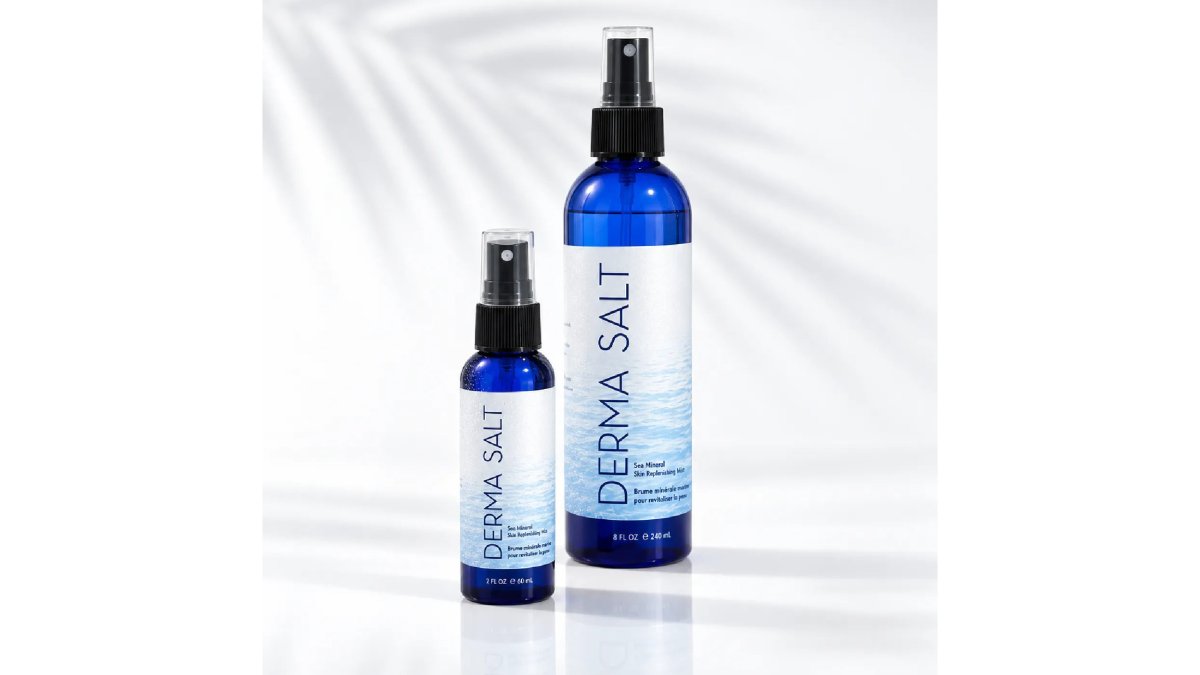
Is a two-ingredient salt spray right for your skin?Derma Salt makes a simple spray of mineral water and salt for reactive, sensitive skin.
Shop Derma Salt
Table of Contents
- Why Two Ingredients Beat a Long List for Reactive Skin
- Salt Water for Sensitive Skin: What It Can and Cannot Do
- Salt for Itchy Skin: Soothing Relief Without the Sting
- Ingredients to Avoid for Sensitive Skin
- How to Patch Test and Build Tolerance
- Salt Water vs. Hypochlorous Acid: Two Different Approaches
- Choosing a Two-Ingredient Salt Product That Fits Your Routine
- Frequently Asked Questions
Why Two Ingredients Beat a Long List for Reactive Skin
Two-ingredient salt products for reactive skin work because they remove the guesswork. When a formula contains only mineral water and salt, there is far less for a sensitive barrier to react to. At Derma Salt, we built our entire approach on that idea: two ingredients, nothing added.
Reactive skin tends to flare when it meets too much at once. Fragrance, preservatives, emulsifiers, and dyes all pile on. Each one is a chance for redness, stinging, or dryness. A short ingredient list cuts those chances down.
The logic is simple. Fewer ingredients mean fewer variables. If your skin reacts, you can trace the cause fast. With a long list, you are stuck guessing which of twenty compounds caused the problem.
That is why we favor a minimal formula. Mineral-rich salt and spring water do the work. No alcohol, no chlorine, no fragrance, no synthetic chemicals. For readers who want a deeper walkthrough of gentle choices, this guide to safe skincare for reactive skin types breaks the process down without the guesswork.
Salt Water for Sensitive Skin: What It Can and Cannot Do
Salt water can help calm and cleanse skin, but it is not a cure. Derma Salt is a mineral water and salt spray, a leave-on format.
Salt water is a simple mix of salt and water. What it can do depends on how it is made and used:
What it cannot do:
- Replace care for a diagnosed skin condition
- Fix a barrier that needs moisture and repair
- Work the same way for every person
- Produce hypochlorous acid, a simple salt-and-water mix does not create that compound, and claims that it does conflate two different substances
Concentration and water quality are where most homemade versions go wrong. A measured dilution, roughly one-quarter to one-half teaspoon of mineral salt per eight ounces of clean water, keeps the mix mild enough for reactive skin. Tap water carries chlorine and variable mineral content, so filtered or mineral spring water is a better base. Homemade water-based products have no preservative, so mix small batches, store them in a clean sealed bottle away from heat and light, and discard after about three to five days. Watch out: a mix that smells off, looks cloudy, or has visible particles should be thrown out, not used.
The American Academy of Dermatology's guidance on sensitive skin is clear that gentle cleansing and avoiding irritants matter more than any single product. Salt water fits that picture as a mild step, not a treatment. The real difference between salt water and a harsh cleanser comes down to what is left behind: a simple salt spray leaves little residue, while a foaming cleanser can strip the barrier. That is the point, and it is also the limit.
Here are the practical limits and handling facts for a simple salt-and-water mix.
| Item | Value | Note |
|---|---|---|
| Measured dilution | One-quarter to one-half teaspoon mineral salt per eight ounces water | Keeps the mix mild for reactive skin |
| Water base | Filtered or mineral spring water | Tap water carries chlorine and variable minerals |
| Storage | Clean sealed bottle away from heat and light | Homemade mixes have no preservative |
| Discard after | About three to five days | Mix small batches |
| Throw out if | Smells off, looks cloudy, or has visible particles | Do not use |
| Cannot do | Replace care for a diagnosed condition | Not a treatment |
| Cannot do | Produce hypochlorous acid | Simple salt and water does not create it |
Salt for Itchy Skin: Soothing Relief Without the Sting
We use Kentucky limestone spring water.
Watch out: spraying salt water onto cracked or broken skin can sting. Hold off on open areas and let them settle first.
Ingredients to Avoid for Sensitive Skin
Ingredients to avoid for sensitive skin include fragrance, alcohol, dyes, and harsh preservatives. These are the usual suspects behind stinging, redness, and dryness.
Fragrance sits at the top of the list. It is one of the most common causes of contact reactions, and "unscented" does not always mean fragrance-free. Our guide to how fragrance triggers sensitive skin reactions explains the difference in plain terms.
Other ingredients to watch:
- Drying alcohols that strip the barrier
- Synthetic dyes and colors
- Strong surfactants in foaming cleansers
- Certain preservatives that irritate reactive skin
The FDA's consumer information on cosmetic ingredients helps shoppers read labels with more confidence. Knowing what to skip is half the battle.
A short ingredient list makes this easy. If you can read the whole label in a few seconds, you already know what you are putting on your skin.
How to Patch Test and Build Tolerance
Patch testing is a sensible way to start any new salt product. Apply a small amount to a hidden area, wait, and watch for a reaction before using it more widely.
Here is a simple routine we recommend:
- Spray a small amount on your inner forearm
- Let it dry fully and leave it uncovered
- Check the area after a few hours and again the next day
- Note any redness, stinging, or itching
- Start with once-daily use, then adjust as your skin allows

The woman is American.
If you notice a reaction such as spreading redness, swelling, or itching that gets worse, rinse the area with cool water and stop using the product. If a reaction does not settle, seek professional advice.
If you have a condition your doctor is actively treating, ask before adding any new product.
Building tolerance takes patience. Most people can use a gentle salt spray more often after the first week or two. If your skin pushes back, slow down to every other day and shorten contact time for rinse-off products. There is no prize for rushing. For families easing into this, these mineral salt spray tips for safe use cover the practical details.
Salt Water vs. Hypochlorous Acid: Two Different Approaches
Salt water and hypochlorous acid are not the same thing. Salt water is a mineral mix; hypochlorous acid is a compound made in a lab or by the body's own immune cells. Both get talked about for reactive skin, and they work in different ways.
Salt water takes a simpler route: minerals and water, nothing more.
The contrast matters. If your goal is the shortest possible ingredient list, a two-ingredient salt product wins. If you want a specific compound, that is a different choice.
For readers weighing this against a chronic condition, this look at whether mineral salt spray is safe for eczema lays out the facts to know.
Choosing a Two-Ingredient Salt Product That Fits Your Routine
Choosing a two-ingredient salt product comes down to three checks: the ingredient list, the water source, and how you plan to use it. Get those right and the rest is easy.
Start with the label. You want mineral water and salt, full stop. No alcohol, no fragrance, no synthetic chemicals. That is the standard we hold ourselves to.
Then think about your routine:
- Daily face and body: a light mist morning and night
- Post-workout or post-shave: a quick spray to calm and clean
- Itchy patches: a targeted spritz as needed
We make Derma Salt with just Kentucky limestone spring water and a blend of mineral-rich salts.
If you are ready to try it, you can view the Derma Salt single pack and see the full ingredient list for yourself.
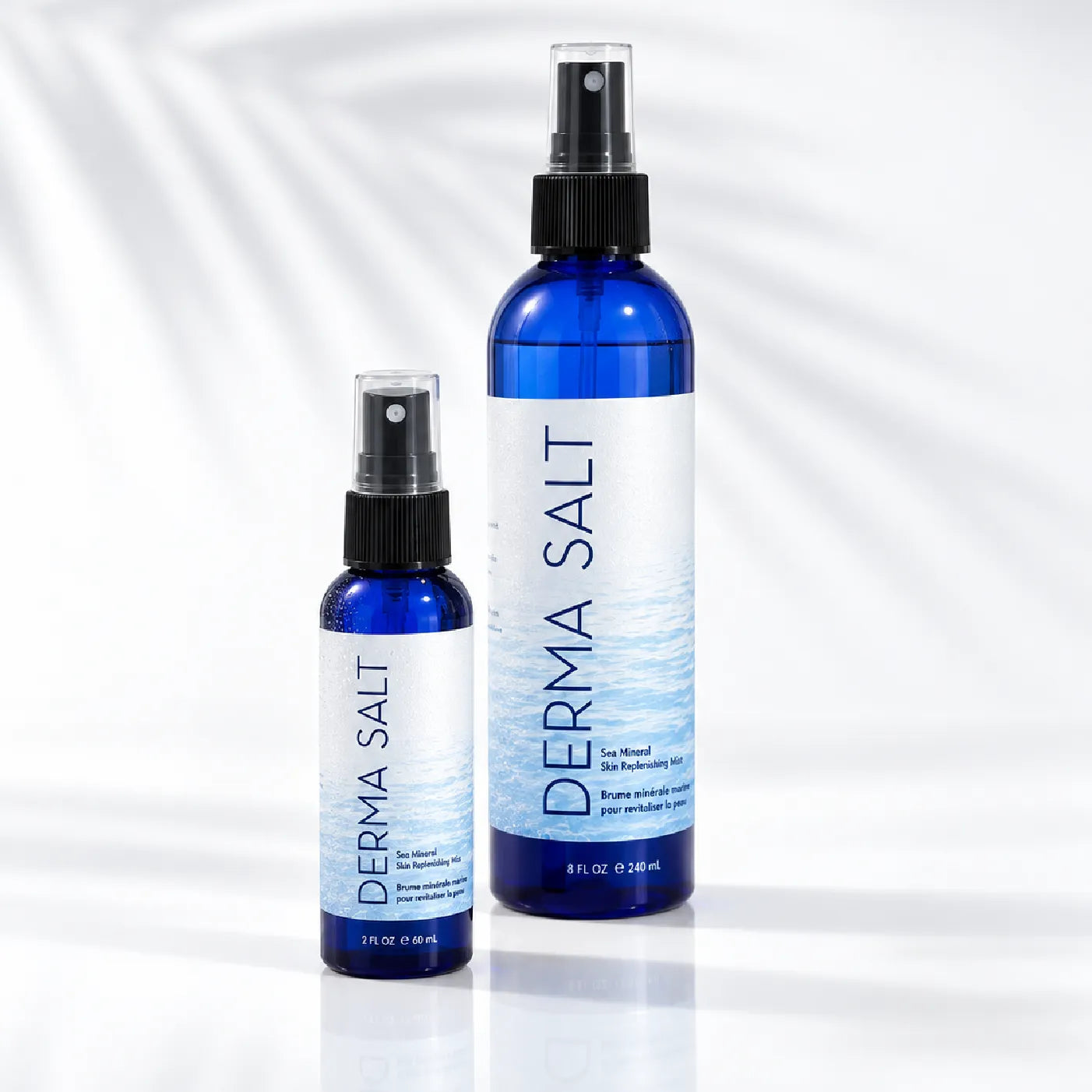
Reactive skin asks for fewer variables, not more. If you have been cycling through long ingredient lists without relief, start with the shortest one you can find: mineral water and salt, nothing added. Derma Salt gives you exactly that, with a formula that supports pH balance, helps fight bacteria, and calms the look of redness and itch. Get started with Derma Salt and give your skin a simpler routine it can actually tolerate.
Frequently Asked Questions
Can salt water irritate sensitive or reactive skin?
Yes, it can. Patch testing on the inner forearm before using a new product on the face or on broken skin is a sensible precaution.
Is putting salt on itchy skin good for it?
Stop using any product if itching gets worse, and see a dermatologist if the itch persists or comes with spreading redness. Stop using it if itching gets worse, and see a dermatologist if the itch persists or comes with spreading redness.
What should you look for in a simple-ingredient product for reactive skin?
Look for a short ingredient list you can read in one line, no fragrance, no alcohol, and no synthetic dyes. Check the label for a full ingredient list, and patch test before regular use.
How should you patch test a salt-based skincare product?
Spray a small amount on the inner forearm and let it dry. Leave it for 24 to 48 hours without washing the area, and watch for redness, stinging, or swelling. Stop at any sign of irritation and rinse with cool water.


