Cart
0
Quick Summary
Dermatologist approved skin care usually means a dermatologist reviewed or recommended a product, but the label rarely says how thorough that review was. Shoppers should look for short, readable ingredient lists, gentle formulas without fragrance or harsh additives, and clear claims about what a product does.
- Ask what was tested and on whom before trusting a dermatologist approved label.
- Choose a product whose ingredient list you can read and understand in one pass.
- Test any new product on the jaw or behind the ear for two to three days first.
- Persistent redness, burning, or itching after stopping a product calls for a dermatologist visit.
- Our formula contains only two natural ingredients, mineral water and salt, with no additional add-ins.
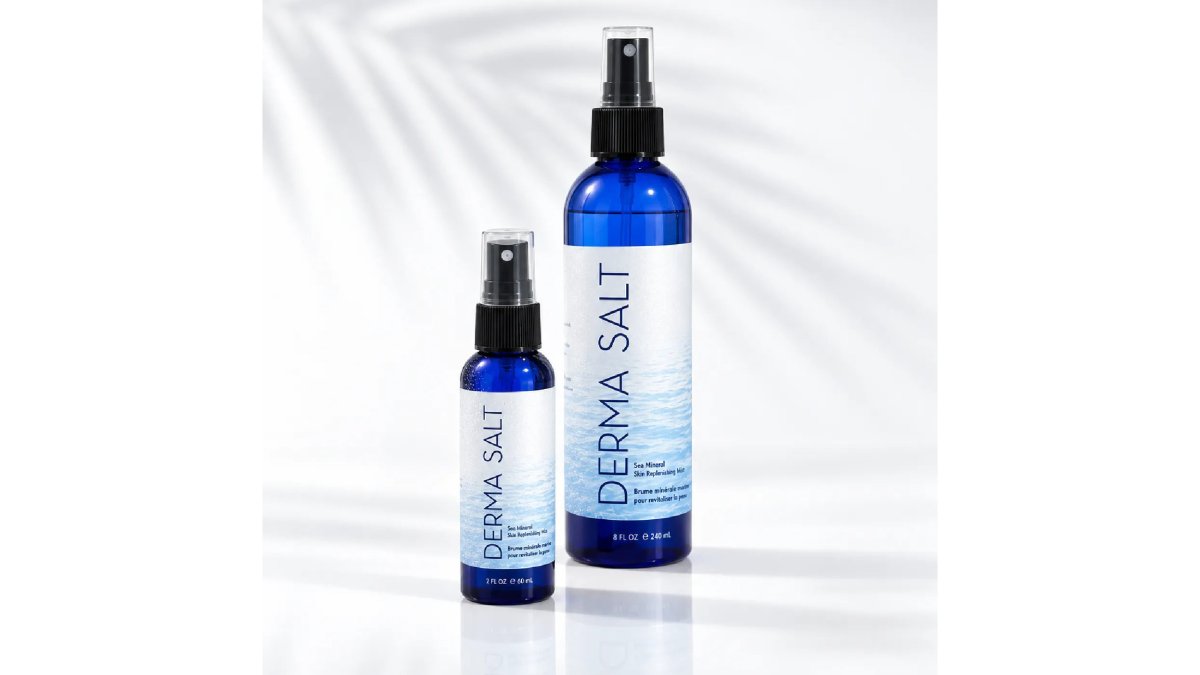
Want a simpler skin care routine?Derma Salt offers a mineral spray made from just mineral water and salt.
Shop Derma Salt Collection
Table of Contents
- What Dermatologist Approved Skin Care Really Means
- How to Choose Skin Care Products for Your Skin Type
- Skin Care Products for Sensitive Skin Recommended by Dermatologists
- Building a Dermatologist-Recommended Skin Care Routine
- Understanding Medical-Grade Skin Care Products
- Ingredient Transparency: Why Simple Formulas Stand Out
- Trying a Simple Mineral Spray: Your Next Step
- Frequently Asked Questions
What Dermatologist Approved Skin Care Really Means
Few phrases in skin care sound as reassuring as "dermatologist approved," yet the label is often vague. Many businesses use it loosely, so shoppers deserve clear criteria before they buy. When you compare any dermatologist approved skin care option, the smartest starting point is simplicity: a short ingredient list you can read and understand.
Dermatologist approved usually means a dermatologist reviewed or recommended a product, but it rarely specifies how thorough that review was. Some endorsements come from formal clinical testing, while others reflect a practitioner's general opinion. Asking what was tested, and on whom, helps you judge how much weight the claim deserves.
Look for the same qualities a dermatologist would check first:
- Short, readable ingredient lists that show exactly what you are applying
- Gentle formulas that avoid fragrance and harsh additives
- Clear claims that describe what the product does and does not do
Our formula contains two natural ingredients, mineral water and salt, with no additional add-ins.
How to Choose Skin Care Products for Your Skin Type
Most product roundups sort by concern, not by how your skin actually behaves. That is the gap worth closing first. Dry, oily, combination, sensitive, and reactive skin each respond differently to the same formula, so the useful question is not "what is trending" but "what does my skin do after I apply it."
A practical way to sort yourself:
- Dry skin feels tight or flaky after cleansing and drinks up richer textures. Look for short formulas that do not strip, and layer a moisturizer over anything water-based.
- Oily skin shows shine within an hour or two and tolerates lighter, water-based textures better than heavy creams. A light mist fits here because it adds refreshment without a heavy residue.
- Combination skin is oily in the T-zone and drier on the cheeks. Apply lighter products first and spot-layer richer ones only where skin feels tight.
- Sensitive or reactive skin stings, flushes, or itches quickly. Fewer ingredients means fewer possible triggers, which is the single most useful filter you have.
Texture matters as much as category. Water-based products generally go on first, followed by creams and oils, and each layer needs a minute to absorb. If a product pills or feels tacky, it is usually a layering problem, not a bad product.
Watch out: patch testing on the inner forearm for two to three days tells you less than testing behind the ear or along the jaw, where skin is closer in behavior to the face.
A formula with only two ingredients, mineral water and salt, with no additional add-ins, means there is less to sort through and less to react to.
Skin Care Products for Sensitive Skin Recommended by Dermatologists
Sensitive skin is less a skin type than a pattern of reacting quickly to irritants.
That is why ingredient restraint matters more than a long list of benefits. Every additional ingredient is another possible trigger, and a shorter list makes it easier to identify what your skin tolerates. Fragrance, drying alcohols, and harsh cleansers are common irritants, so they are often the first things to remove.
A sensible way to introduce anything new:
- Start with one new product at a time, not a full routine overhaul.
- Apply a small amount behind the ear or along the jaw for two to three days.
- If there is no reaction, move to the full face every other day for a week.
- Only then move to daily use, and add the next product after that.
Watch out: if redness, burning, or itching persists or worsens after you stop the product, that is a signal to consult a dermatologist rather than keep experimenting. Persistent symptoms should always be evaluated by a professional.
For readers who react easily, the simplest starting point is a formula short enough to read in one breath. A product built on two natural ingredients, mineral water and salt, with no additional add-ins, gives sensitive skin fewer variables to manage. It is not a substitute for professional care.
Building a Dermatologist-Recommended Skin Care Routine
A basic routine usually includes a gentle cleanser, a moisturizer, and daytime sun protection. Adding a mineral spray can fit into this sequence as a refreshing step after cleansing or during the day.
Apply products from thinnest to thickest. Water-based products generally go on first, followed by creams and oils. Give each layer a minute to absorb before adding the next one.
Keep your routine consistent for several weeks before judging results. Skin often needs time to respond, and frequent switching makes it hard to tell what is working.
Understanding Medical-Grade Skin Care Products
"Medical-grade" is a marketing term that is not defined for cosmetics, so it helps to read it carefully.
FDA guidance on cosmetic product labeling
When you see medical-grade language, ask what evidence supports it. Clinical testing, published research, and clear ingredient disclosure are stronger signals than marketing terms alone.
Ingredient Transparency: Why Simple Formulas Stand Out
Transparent labels make it easier to understand what you are putting on your skin. Long ingredient lists can hide potential irritants, and they make it harder to track reactions.
Simple formulas have a practical advantage. When a product contains only mineral water and salt, there are fewer variables to consider. That is the approach we take at Derma Salt, where the formula is built around two natural ingredients with no additional add-ins.
Read every label before you buy, and compare the number of ingredients across products. Shorter lists are easier to evaluate.
Simple formulas are easier to evaluate, and the two-ingredient approach is easy to compare at a glance.
| Feature | What the article says | Why it matters |
|---|---|---|
| Ingredients | Mineral water and salt | Fewer variables to track |
| Additional add-ins | None | Less to react to |
| Label check | Read every label | Compare ingredient counts |
| Shorter lists | Easier to evaluate | Simpler to track reactions |
Trying a Simple Mineral Spray: Your Next Step
If you want to try a minimalist approach, a mineral spray is a straightforward place to start. Spray lightly on clean skin, let it dry, and follow with your regular moisturizer if your skin feels dry.
Start with one application a day, then adjust based on how your skin responds. Stop using the product if you notice new irritation.
Ready to see how a simple formula fits your routine? Shop the Derma Salt collection and explore options for individuals and families.
Frequently Asked Questions
What does dermatologist approved actually mean on a skin care label?
Dermatologist approved usually means a dermatologist reviewed or tested the product, but the term is not regulated the same way across brands. Shoppers should check whether the claim names a specific study, a panel, or a testing method. A label that offers no detail is a weaker signal. Look for plain ingredient lists, and treat the claim as one factor among several rather than proof of results.
Are dermatologist recommended skin care products safe for sensitive skin?
Many products marketed for sensitive skin are fragrance-free and use fewer ingredients, which lowers the chance of irritation. Patch testing a small area for several days before full use is a practical first step. If redness, stinging, or swelling appears, stop using the product and consult a dermatologist. People with eczema or acne should discuss new products with their doctor.
How do I choose skin care products for my skin type?
Start by identifying whether your skin tends to be dry, oily, combination, or sensitive. Dry skin usually benefits from richer moisturizers, while oily skin often does better with lightweight gel formulas. Read labels for fragrance and alcohol content, and introduce one new product at a time so you can notice any reaction. Simple routines with a gentle cleanser, moisturizer, and sunscreen suit most people.
Can a simple mineral water and salt spray fit into a natural skin care routine?
Derma Salt is a natural spray made with only two ingredients, mineral water and salt, with no added fragrances or other additives. It is a natural option built on a short, readable formula. Pairing a spray with a fragrance-free moisturizer is a common approach. Shoppers can visit the Derma Salt website for current pricing, which depends on quantity and delivery.