Cart
0

Table of Contents
- What Makes the Best Mineral Water Spray for Face
- How to Choose a Best Hydrating Face Mist Spray
- Thermal Spring Water Facial Spray: What to Expect
- Mineral Water Spray for Sensitive Skin: Suitability by Skin Type
- How to Use Facial Mist Without Increasing Dryness
- Common Mistakes When Buying a Mineral Water Spray
- Conclusion
- Frequently Asked Questions
Last Updated: October 16, 2026
What Makes the Best Mineral Water Spray for Face
Walk down any skincare aisle and you'll see shelves of facial mists promising instant refreshment. But most of them are little more than scented water in a pretty bottle. The best mineral water spray for face is different: it's a simple, fragrance-free formula that delivers dissolved minerals like calcium, magnesium, and silica directly to your skin barrier, without alcohol or preservatives that can sting reactive skin.
Mineral Water vs Thermal Spring Water
The terms get used interchangeably, but they describe different things. Mineral water spray is water naturally containing dissolved minerals, often bottled at the source and sealed with a propellant or pump. Thermal spring water comes from geothermally heated springs and picks up its mineral profile as it travels through rock. Both can soothe skin. The practical difference for you is the mineral content listed on the label, not the marketing story behind the spring.
What the Evidence Actually Shows
Here's where most guides oversell. A mineral water spray is not a treatment for eczema, acne, or rosacea, and no spray will replace a prescription your dermatologist recommends. The American Academy of Dermatology's guidance on sensitive skin care notes that fragrance-free, minimal-ingredient products are generally better tolerated by reactive skin, which is exactly the category a plain mineral water spray falls into.
Key Takeaway
A mineral water spray supports hydration and temporary soothing. It is not a substitute for prescribed treatment of a diagnosed skin condition.
How to Choose a Best Hydrating Face Mist Spray
The best hydrating face mist spray is the one with the shortest, cleanest ingredient list and a delivery system that produces a fine mist rather than large droplets. Large droplets sit on the surface and evaporate, which can leave skin feeling tighter than before.
Most roundups rank sprays by vibe. We rank them by five measurable criteria, and we state them up front so you can apply the same test to anything you pick up.
Our Selection Criteria
- Ingredient review. Every ingredient must be identifiable and fragrance-free. If "fragrance" or "parfum" appears, the product is disqualified from the sensitive-skin category.
- Spray quality. We judge droplet size and distribution. A pump or propellant that delivers a continuous, even cone beats a sputtering nozzle every time.
- Packaging. An airtight, opaque or tinted container protects the water from light and contamination. A clear bottle that sits on a sunny shelf is a strike against it.
- Price per ounce. Divide the bottle price by the fluid ounces. A $12 1.7-oz can works out to about $7.06 per ounce; a $19 10-oz bottle works out to about $1.90 per ounce. Same category, very different value.
Mineral Composition, Compared in One Format
Labels bury this information in different places, so here is the consistent format we use. Pull the numbers from the product page or the bottle itself and line them up side by side.
| What to record | Why it matters |
|---|---|
| Water source (spring, thermal, or purified) | Tells you whether minerals are naturally occurring or added |
| Calcium | Supports barrier function and is the most common mineral in these sprays |
| Magnesium | Associated with calming and barrier support |
| Silica | Contributes to a smooth, soft feel on skin |
| Trace minerals (selenium, zinc, strontium) | Present in small amounts; part of the source's signature |
| Total dissolved solids (TDS) | A higher number means a more concentrated mineral profile |
| Preservative system | Determines shelf life and tolerance for reactive skin |
| Propellant or pump | Affects droplet size, feel, and how much product you waste |
If a brand will not publish its mineral content or TDS, treat that as a data point in itself. Transparency is part of the product.
Reading the Ingredient List
Check these five things before you buy:
- Water source: Look for spring water or thermal water named specifically, not just "water."
- Mineral content: Calcium, magnesium, silica, and trace minerals are the ones worth seeing on the label.
- No alcohol: Denatured alcohol or ethanol speeds evaporation and can dry skin out.
- No added fragrance: Fragrance is a common trigger for sensitive skin reactions (Fragrance contact allergy: a clinical review).
Water-Only Spray vs Formulated Facial Mist
These are two different products, and the distinction decides which one you actually need.
| Feature | Mineral water spray | Formulated facial mist |
|---|---|---|
| Base | Water plus dissolved minerals | Water plus humectants or actives |
| Typical ingredients | Spring or thermal water, preservative, propellant | Glycerin, hyaluronic acid, niacinamide, botanical extracts |
| Primary job | Refresh, cool, temporarily calm | Hydrate, treat, prep, or set |
| Lasting moisture | No, unless sealed with moisturizer | Yes, if humectants are present |
| Best for | Sensitive, reactive, post-sun, post-workout | Dry, dull, or targeted concerns |
| Risk for reactive skin | Low | Higher, depending on actives and fragrance |
If a spray lists niacinamide or other actives, it's a formulated facial mist, not a mineral water spray. Both have a place, but they do different jobs.
Pro Tip
Before you commit to a full-size bottle, buy the smallest size available and run the price-per-ounce math. A travel size at a fair per-ounce rate is the cheapest way to test spray quality and tolerance.
Thermal Spring Water Facial Spray: What to Expect
A thermal spring water facial spray typically feels cooling and calming on contact, with effects that last minutes rather than hours. That short window is not a flaw. It's the nature of a water-based product with no occlusive ingredients to lock moisture in.
What to expect in practice:
- Immediate cooling and a reduction in that tight, hot feeling after sun or wind exposure
- A temporary calming effect on redness and irritation
- No lasting hydration unless you follow with a moisturizer
This is the honest version of the category. Used correctly, a thermal water spray is a useful step in a routine. Used as a standalone moisturizer, it will disappoint you.
Mineral Water Spray for Sensitive Skin: Suitability by Skin Type
Mineral water spray for sensitive skin is generally well tolerated because the formula is simple and free of the common irritants found in scented or alcohol-based mists. But suitability still depends on your skin type and what you're trying to address.
| Skin Type | Suitability | Best Use |
|---|---|---|
| Sensitive / reactive | High | Calming after cleansing, post-sun |
| Dry | Moderate | Layering before moisturizer |
| Oily / acne-prone | High | Refreshing without adding oil |
| Combination | High | Midday refresh, pre-moisturizer |
| Eczema-prone | Moderate | Between prescribed treatments only |
If you have a diagnosed condition, treat the spray as a supportive step, not a replacement for the plan your dermatologist gave you.
Watch Out
Spraying mineral water on dry skin and letting it air-dry can pull moisture out as it evaporates. Always follow with a moisturizer within a minute or two.
How to Use Facial Mist Without Increasing Dryness
The mistake that turns a helpful product into a drying one is application order. Spray, wait, and moisturize, in that sequence, every time.
Why Water Alone Can Dry You Out
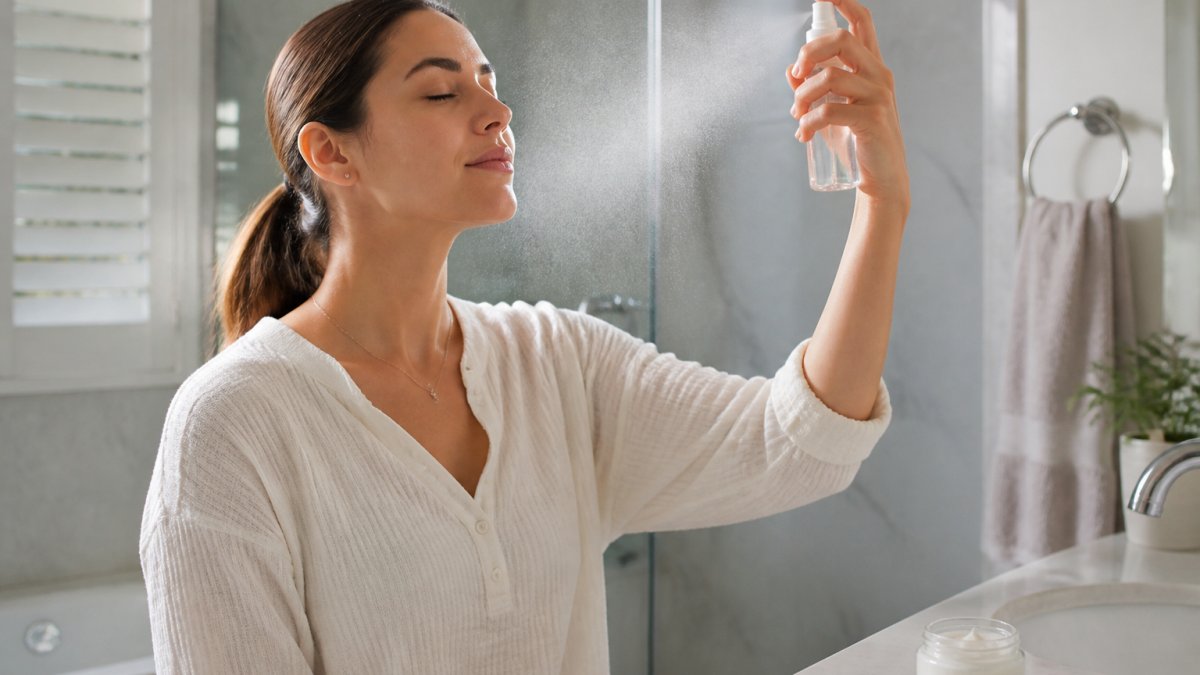
Water on skin evaporates. As it evaporates, it takes some of your skin's own moisture with it. That is why a spray applied to dry skin and left to air-dry can leave you tighter than you started. The fix is not to stop using the spray. The fix is to seal it. A moisturizer applied while skin is still damp traps the water underneath and turns a temporary refresh into actual hydration.
The Routine We Recommend
- Cleanse and pat skin mostly dry, leaving it slightly damp.
- Hold the bottle 6 to 8 inches from your face. Closer than that concentrates the spray in one spot and wastes product.
- Close your eyes and mist in a slow sweep, not a single concentrated spray.
- Wait 30 to 60 seconds. Long enough for the water to absorb, short enough that it has not fully evaporated.
- Apply moisturizer while skin still feels cool and damp.
- Reapply midday if skin feels tight, then follow with a light moisturizer.
That last step is the one most people skip, and it's the one that decides whether the spray helps or hurts.
How Often Is Too Often
There is no fixed number, but there is a pattern worth watching. If you find yourself reaching for the spray every hour because your skin feels tight again, the spray is not the problem, your moisturizer is. Two to three applications a day is typical for most people. If you need more than that, add a richer moisturizer rather than more mist.
Use Cases Beyond General Refreshment
A water-only mist earns its place in more situations than the label suggests.
- Post-workout. Sweat and heat leave skin hot and salty. A cool mist brings the temperature down and rinses away residue before you cleanse. Follow with moisturizer once skin is dry.
- Travel. Cabin air is dry and recycled. A mist mid-flight plus a moisturizer before landing keeps skin from arriving tight and dull. Keep the bottle under the TSA liquid limit if you are carrying it on.
- Makeup setting. A fine mist over finished makeup can soften powder and reduce a cakey look. Hold the bottle farther back, 10 to 12 inches, so the mist falls rather than hits. Water-only sprays are better for this than mists with heavy humectants, which can break down makeup.
- Post-procedure. After a professional treatment, skin is often reactive and your practitioner may restrict what you apply. A plain mineral water spray is sometimes permitted when nothing else is. Ask your practitioner before you use anything, including water.
Key Takeaway
A mineral water spray is a step, not a standalone moisturizer. Distance, timing, and sealing with moisturizer decide whether it helps or dries you out.
Common Mistakes When Buying a Mineral Water Spray
The biggest mistake is buying on packaging rather than the ingredient list. A bottle that says "thermal" or "mineral" on the front can still contain alcohol, fragrance, or preservatives your skin won't tolerate.
Other mistakes we see often:
- Choosing based on scent. If it smells like anything, it has added fragrance.
- Expecting lasting hydration from water alone. Water evaporates; moisturizer holds it in.
- Skipping the patch test. Even simple formulas can surprise reactive skin.
- Ignoring the spray mechanism. A coarse spray wastes product and sits on the surface.
Pro Tip
Keep one bottle in the fridge. The cold mist is far more effective at calming post-sun redness and itch than a room-temperature spray.
Conclusion
Picking a mineral water spray comes down to three things: a short ingredient list, a real mineral source, and a fine-mist delivery system. Get those right and you have a genuinely useful step in a sensitive-skin routine.
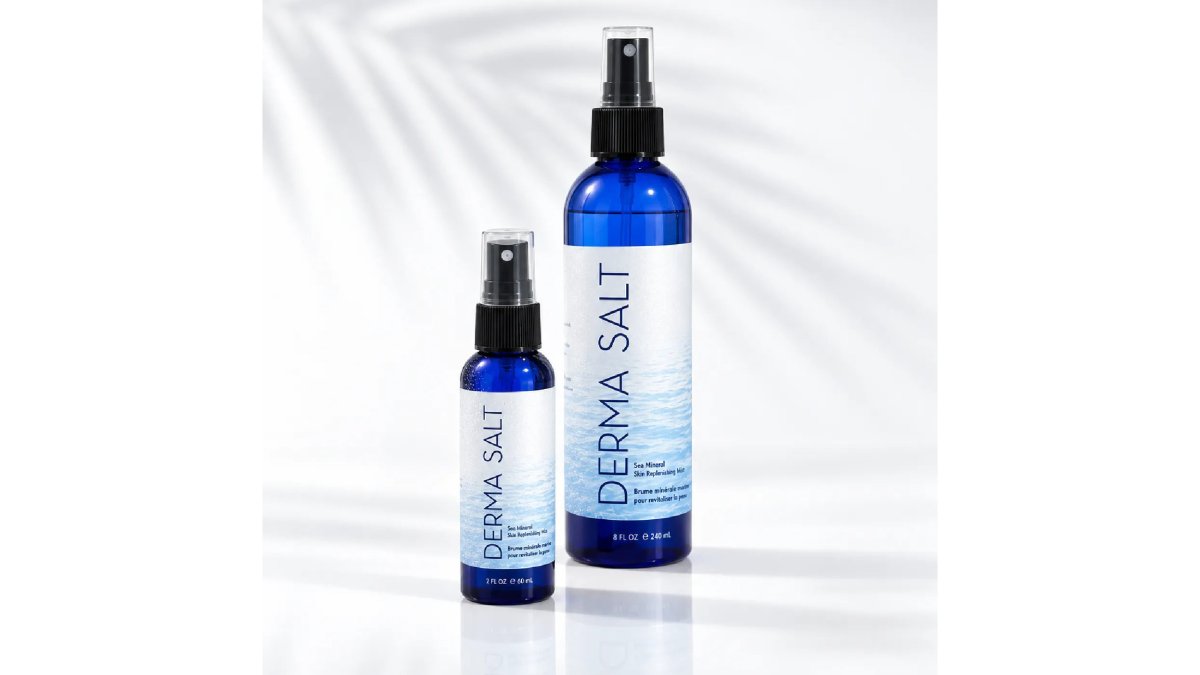
At Derma Salt, we built our spray around mineral-rich Kentucky spring water and dissolved salts, free from harsh chemicals, to support pH balance and calm dryness, redness, and itching.
Frequently Asked Questions
What is the difference between mineral water and thermal spring water for skin?
Thermal spring water comes from geologically heated underground sources and picks up dissolved minerals as it travels through rock. Mineral water is bottled from springs or wells with naturally occurring minerals like calcium, magnesium, and silica. Both can hydrate and soothe, but thermal spring water often has a longer documented history of dermatological use. The mineral content, not the label, is what affects how the spray performs on your skin.
Can you use mineral water spray on your face every day?
Yes, a mineral water spray is generally safe for daily use, including multiple times per day. The key is to apply moisturizer within about 30 seconds while skin is still damp. If you let the water evaporate fully, it can pull moisture from your skin and leave it drier than before. For sensitive skin, start with once or twice daily and adjust based on how your skin feels.
Should you let facial mist dry on your skin or apply moisturizer afterward?
Apply moisturizer while the mist is still damp on your skin, within 30 seconds of spraying. Letting a water-only mist evaporate completely allows it to draw moisture out of your skin barrier, which increases dryness over time. The spray acts as a hydration layer; the moisturizer seals it in. This two-step approach is especially important for anyone using a mineral water spray for sensitive skin or during dry winter months.
Can mineral water spray help soothe sensitive or irritated skin?
Mineral water sprays can temporarily calm irritation and reduce redness, particularly formulas rich in calcium, magnesium, and silica. These minerals support the skin barrier and have mild anti-inflammatory properties. However, a spray alone will not resolve chronic conditions like eczema or rosacea. It works best as part of a routine that includes a fragrance-free moisturizer. If irritation persists beyond a few days, see a dermatologist.